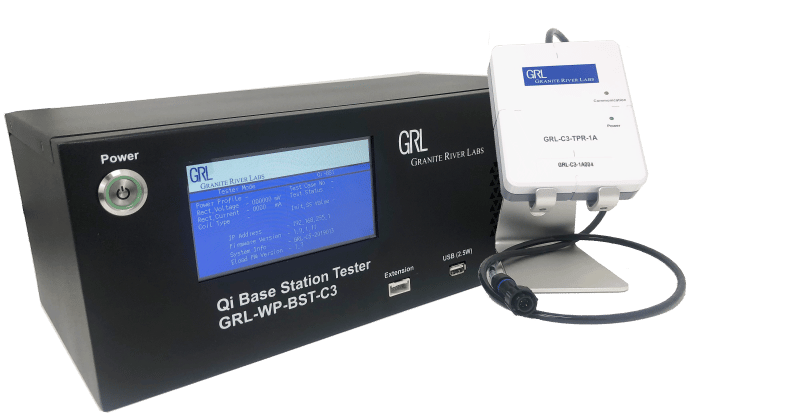

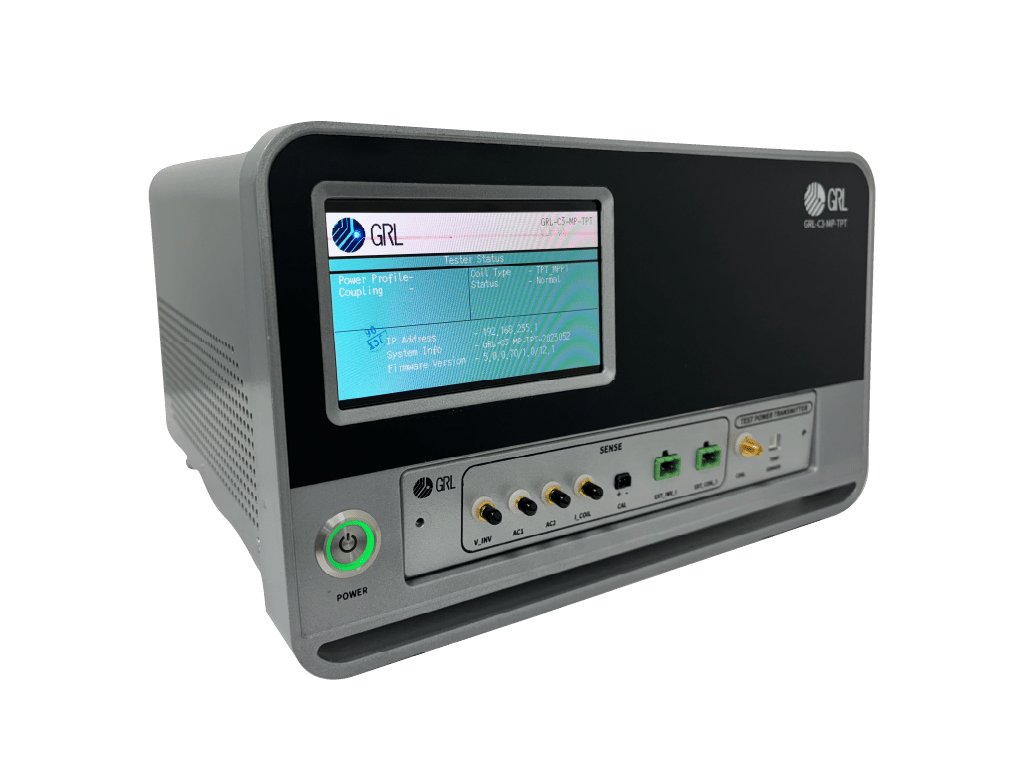
Qi2 Wireless Charging Transmitter (GRL-C3-MP-TPR) and Receiver Tester (GRL-C3-TPT)
The industry's first WPC approved automated Qi2.2 wireless charging compliance test solutions.
%20and%20Receiver%20Tester%20(GRL-C3-TPT).webp?width=2000&height=1182&name=GRL%20Qi2%20Wireless%20Charging%20Transmitter%20(GRL-C3-MP-TPR)%20and%20Receiver%20Tester%20(GRL-C3-TPT).webp)
Overview & Features
The GRL-C3-MP-TPR & GRL-C3-TPT are the industry's first WPC approved automated Qi2.2 wireless charging compliance test solutions designed for OEMs and developers to test wireless chargers and smartphones respectively. Both solutions are designed to help users keep up with ever-developing wireless charging standards without compromising on quality, convenience, or data security. With a comprehensive suite of features and a user-friendly interface, the GRL-C3-MP-TPR & GRL-C3-TPT lets you go beyond mere compliance and achieve superior product design that can help capture significant portions of the global wireless charging consumer market.
- Test Qi and Qi2 wireless charging products for market launch affordably and reliably
- Easily upgrade to the latest Qi standard with its modular design
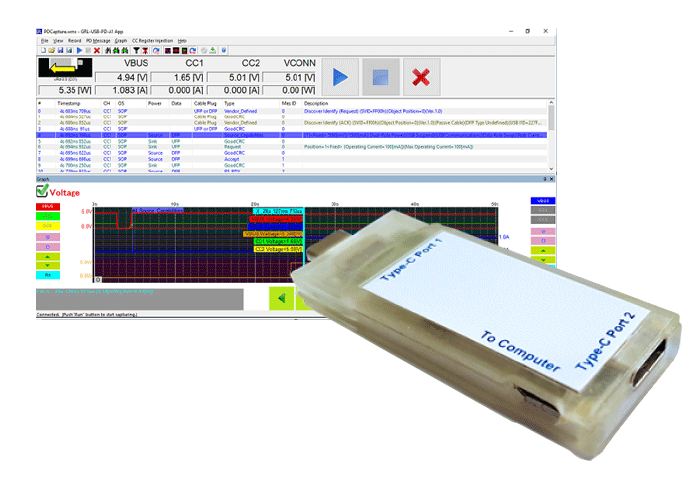
- View vital information at a glance with all-in-one protocol & trace viewer that includes:
- Current
- Power
- Protocol
- Temperature
- Voltage
- Test results
Key features
- Unique protocol and trace viewer: View essential test information such as protocol, voltage, current, and measurement results from a single window, generated and arranged neatly by a powerful and comprehensive protocol and trace viewer.
- Fully automated compliance testing and debugging: Automated compliance testing and rapid debugging can be conducted within the Exerciser mode that is designed with an intuitive interface and in-built algorithms.
- Modular design for quick and affordable upgrades: Between 2010 and 2023, the Wireless Power Consortium (WPC) has released a total of five wireless charging versions, with the most recent being the Qi2/Qi2.0 MPP. With the GRL-C3-MP-TPR, OEMs and developers can easily keep up with future wireless charging standards as they arise through modular upgrades instead of purchasing an entirely new solution.
- Offline JSON report analyzer + Authentication Validator for data security: Collaborate effortlessly while keeping proprietary data safe with the offline JSON viewer/editor and Authentication Validator which can be easily accessed from a computer.
- Trusted 3rd party calibration: GRL Platform Solutions Wireless Power Test Solution is the only solution that comes with supporting 3rd party calibration service.
- Affordable and accessible test solution for wireless OEMs and developers: Both the GRL-C3-MP-TPR & GRL-C3-TPT solution and accompanying calibration test services are designed to help OEMs and manufacturers test for wireless charging performance and compliance with minimal overhead cost.
Options & Accessories
The following optional accessories are available for manufacturers and developers who wish to test their products for compliance with the latest Qi v2.x wireless charging standards as well as preceding power profiles including Qi 2.0 MPP, Qi 2.0 or 1.3.3 BPP, and Qi 2.0 or 1.3.3 EPP.
Qi Transmitter tester:
- GRL-C3-II-MP-TPR: WPC Qi Wireless Charging Transmitter Tester for MPP power profiles up to 15W (Qi 2.0.1 & Qi 2.1)
- GRL-C3-TPR-COMBOL: Qi Wireless Charging Base Station Testers for BPP (v1.3.3, 2.0.1 and 2.1) and MPP power profiles up to 15W (Qi 2.0.1, v2.1)
- GRL-C3-TPR-COMBO: Qi Wireless Charging Base Station Testers for BPP & EPP (Qi 1.3.3, Qi 2.0.1 and Qi 2.1) and MPP power profile (Qi 2.0.1, v2.1)
- GRL-C3-II-MP-TPR-25UP: Wireless Charger Transmitter Tester for 25W Upgrade
- GRL-MP-TPR-AUX-ATL: A set of LCR Jig, Positioning Tool, TPR MP1 Coil, TPR MP3 Coil and TPR 400G Coil for magnetic boundary LCR testing and magnet shear/pull force testing"
Qi receiver tester:
- GRL-C3-II-MP-TPT: Qi Wireless Charging Receiver Tester for MPP power profile (Qi 1.3.3, Qi 2.0.1, Qi 2.1 ) and BPP power profile (Qi 1.3.3, Qi 2.0.1 and Qi 2.1)
- GRL-C3-II-MP-TPT-BP: Qi Wireless Charging Receiver Tester for BPP power profile (Qi 1.3.3, Qi 2.0.1 and Qi 2.1)
- GRL-C3-II-EP-TPT: Qi Wireless Charging Receiver Tester for BPP & EPP power profiles up to 15W (Qi 1.3.3, Qi 2.0.1 & Qi 2.1)
- GRL-C3-II-31-TPT: WPC Qi Wireless Charging Receiver Tester for MPP power profile (Qi 2,1, Qi v2.0.1 & Qi 1.3.3), EPP power profiles up to 15W (Qi 2.1, Qi 2.0 & Qi 1.3.3) and BPP power profiles (Qi 2.1, Qi2.0.1 Qi v1.3.3)
- GRL-C3-II-MP-TPT-25UP: Wireless Charger Receiver Tester for 25W Upgrade
- GRL-MP-TPT-AUX-ATL: A set of LCR Jig, Positioning Tool, TPT MP1 Coil, and TPT 400G Coil for magnetic boundary LCR testing and magnet shear/pull force testing"
Qi Transmitter and Receiver Tester Combo:
- GRL-C3-EP-COMBO: Qi Wireless Charging Transmitter and Receiver Testers for EPP power profile (Qi 2.1, Qi 2.0.1 and Qi 1.3.3)
- GRL-C3-MP-COMBO: Qi Wireless Charging Transmitter and Receiver Testers for MPP power profile (Qi 2.1 and Qi 2.0.1)
- GRL-C3-EP-MPCOMBO: Qi Wireless Charging Transmitter and Receiver Testers for EPP power profile (Qi 2.1, Qi 2.0.1 and Qi 1.3.3), BPP Power Profile (Qi 2.1, Qi 2.0.1 and Qi 1.3.3), BPP Power Profile (Qi 2.1, Qi 2.0.1 and Qi 1.3.3)
- GRL-MP-TPR-TPT-AUX-ATL: A set of LCR Jig, Positioning Tool, TPR MP1 Coil, TPR MP3 Coil and TPR 400G Coil, TPT MP1 Coil and TPT 400G Coil for magnetic boundary LCR testing and magnet shear/pull force testing"
Wireless charging solutions for Qi 2.1 standards and beyond
LCR Coil Test Jig
 |
|
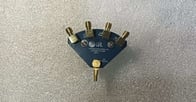
LCR SMA Fixture
 |
|
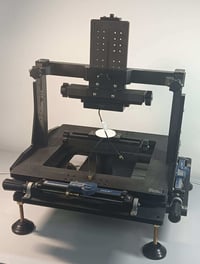
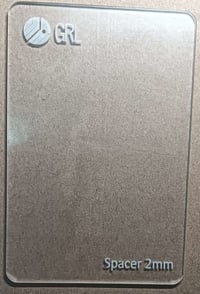
Positioning Tool
 |
|
 |
|
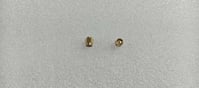
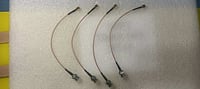
Connectors & Cable Accessories
 |
|
 |
|
 |
|
 |
|
LQK measurement test procedure setup
Legacy Qi wireless charging standard solutions (2.0 and prior)
- GRL-C3-MP-TPR: Qi 2.0 MPP Power Transmitter Compliance Tester
- GRL-C3-WP-TPR: Qi 2.0 / Qi 1.3.3 Power Transmitter Compliance Tester
- GRL-C3-TPT: Qi 2.0 / Qi 1.3.3 and Qi2.0 MPP Power Receiver Compliance Tester
- For a dedicated solution for BPP and EPP testing, check out the GRL-WP-BST-C3.
For inquiries on which accessory to purchase and future upgrades, simply reach out to us.
Download Software
For more technical details, download the datasheet for WPC Qi Wireless Charging Base Station Tester (GRL-C3-MP-TPR) or WPC Qi Wireless Charging Receiver Tester (GRL-C3-TPT). Alternatively, you may request a demo to watch either solutions in action.