
Qi started as a 5W wireless charging standard and has grown over time with new features and higher power support. Unlike earlier updates that focused on faster charging, Qi 2.3.1 focuses on compliance tests improvements, minor spec updates.
The main updates are
- In protocol, two new packets are introduced SGC & MSN
- Revised EPT timing
- Removal of dPLoss calibration for MPP15.
These changes help the charger and device respond correctly when charging conditions change. Overall, Qi 2.3.1 improves reliability, compatibility, and charging performance across different products.
The Qi Power Profiles in 2.3.1
Qi 2.3.1 supports different types of wireless charging, depending on how much power a device needs.
- BPP supports basic wireless charging up to 5W.
- EPP supports faster wireless charging up to 15W.
- MPP uses magnetic alignment to help devices charge more efficiently.
- MPP has two versions: MPP15 (15W) and MPP25 (25W).
SGC: [System Gain Change] A New FSK Response for Transmitter Configuration Changes
One of the most visible protocol additions in Qi 2.3.1 is the introduction of a new FSK response pattern called SGC. During wireless power transfer, the PTX may change its CTX capacitor configuration as part of its operating strategy. That change affects the transmitter's operating condition, so the receiver benefits from knowing that the transmitter configuration has changed rather than continuing operation without that information.
Qi 2.3.1 addresses this by defining the SGC response.
Key Points:
- PTX changes its CTX capacitor configuration.
- PTX sends SGC using FSK.
- PRX receives the SGC response.
- PRX optimizes its charging behavior for the updated transmitter condition.
The following example illustrates how the PTx sends an SGC response.
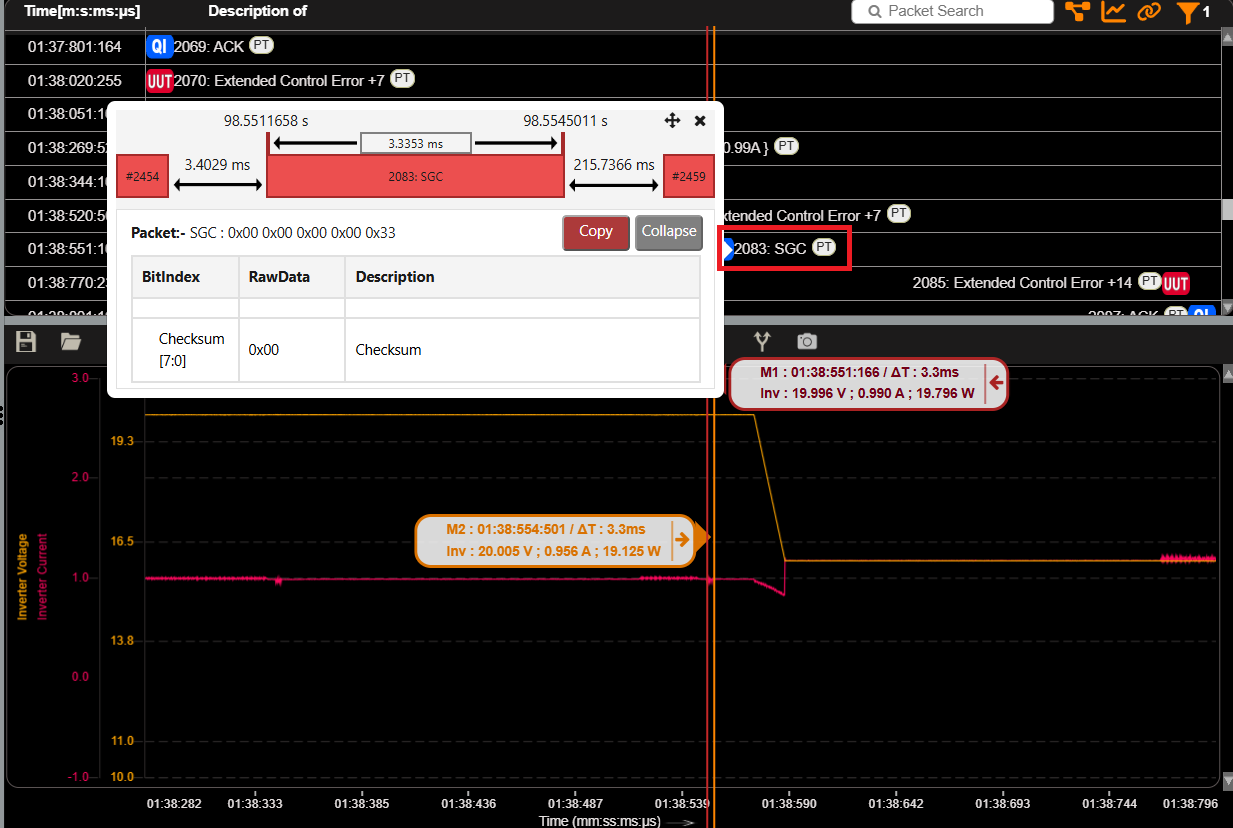
Figure 1: SGS Response packet shown in MPP TPT Compliance Test Software
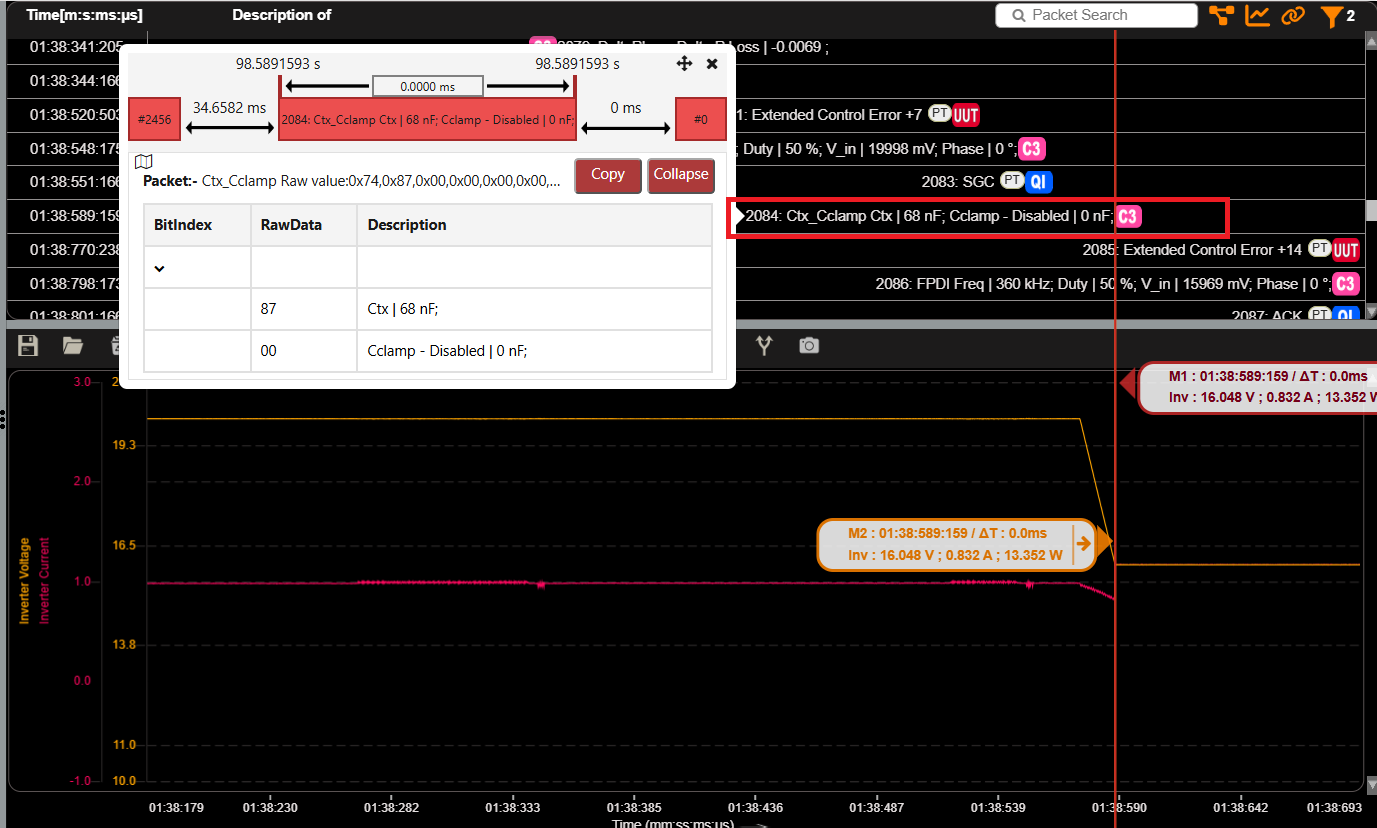
Figure 2: CTX switching shown in MPP TPT Compliance Test Software
From an implementation perspective, this affects both sides of the Qi interface. A transmitter that performs the applicable CTX capacitor changes must generate the appropriate SGC response. A receiver must recognize that response and adjust its operation accordingly.
MSN: Communicating Changes in Available Power Modes
Another significant Qi 2.3.1 change relates to power-mode management. A PTX can use different power modes to optimize power transfer. However, the transmitter’s operating conditions may change during charging. When those conditions change, the power mode currently being used may no longer be supported.
Qi 2.3.1 defines a protocol mechanism for informing the receiver of this change using the MSN packet.
Key Points:
- PTX operating conditions change.
- The current power mode becomes unsupported.
- PTX sends MSN.
- PRX requests an appropriate power mode.
The following example illustrates the Mode Selection Notification Packet.
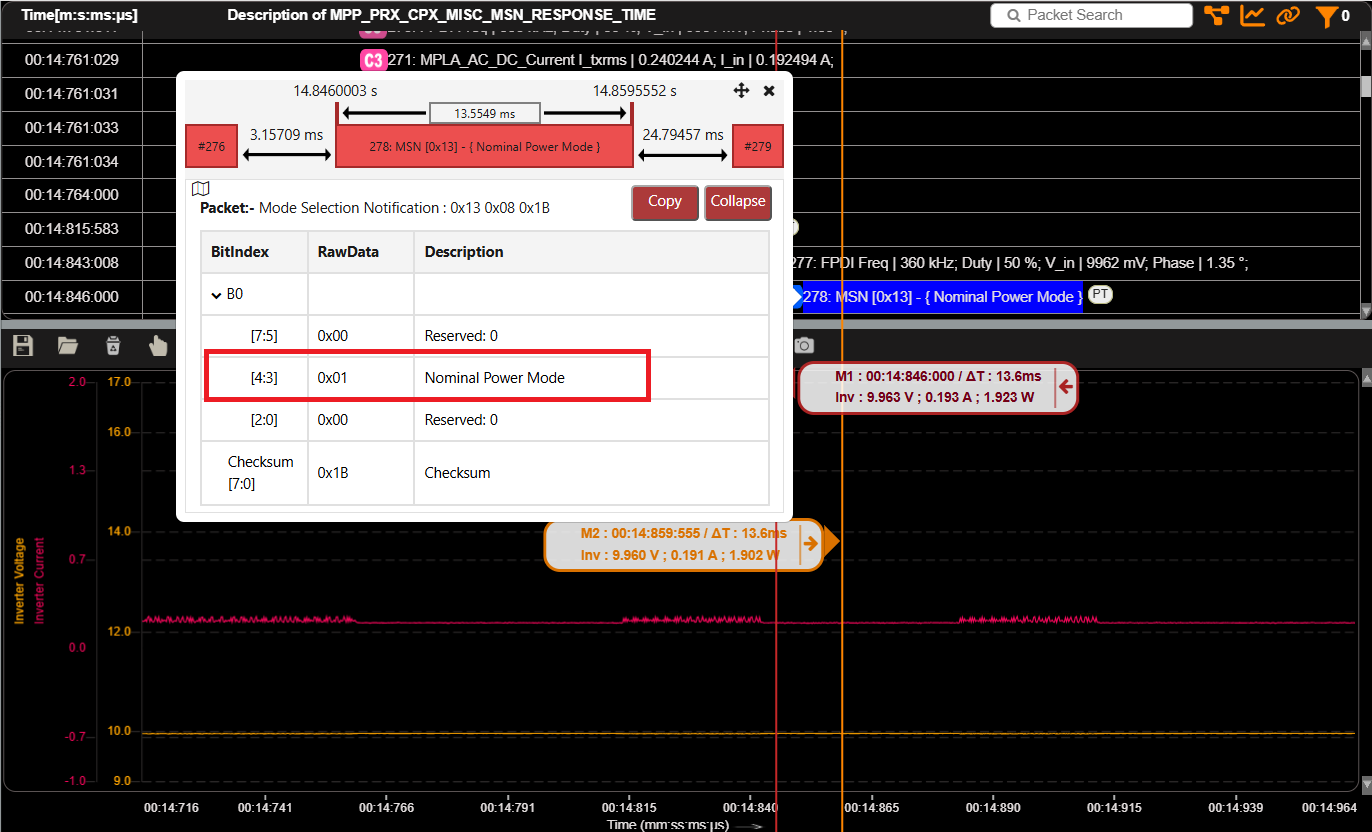
Figure 3: MSN Packet shown in MPP TPT Compliance Test Software
This is an important addition because it creates explicit protocol behavior around changing transmitter capability. Without such coordination, a receiver could continue operating based on assumptions that are no longer valid after the transmitter condition has changed.
For products supporting discrete power modes, MSN handling should therefore be considered as part of the design rather than only as a certification detail. On the PTX side, the implementation must determine when the operating condition requires a mode change and send the required notification. On the PRX side, the implementation must correctly interpret the MSN packet and request a power mode that remains supported.
This makes power-mode transition behavior an important validation area for Qi 2.3.1 designs. Engineers should test both the message exchange and the system-level transition that follows it.
Revised EPT Timing for MPP
Qi 2.3.1 also introduces changes to End Power Transfer, or EPT, timing for the Magnetic Power Profile. EPT is a critical part of the Qi protocol because it is associated with terminating power transfer.
The release briefing identifies a specific issue observed during ASK decoding: some packets could be interpreted as an EPT code, resulting in a longer-than-intended pause in charging. Qi 2.3.1 modifies the relevant MPP timing requirements to address this condition.
The requirement that changed is the Digital Ping delay time, t_nextping — how long a transmitter waits before issuing the next Digital Ping after an EPT. In the BPP/EPP baseline this delay was deliberately long: a charge-complete EPT (EPT/cc) allowed a typical delay of fifteen minutes, an over-temperature EPT (EPT/ot) a minimum of 5 minutes, and several codes suppressed Digital Ping altogether until the user physically removed the receiver. For MPP in Qi 2.3.1, these delays are bounded by a maximum of 400 ms. Codes that were already short and bounded — EPT/rst, EPT/rep, EPT/rcl and EPT/pmc — keep their existing timing.
The practical impact is a change in the cost of getting EPT wrong. Previously, a packet misread as an EPT code could take charging offline for minutes or leave it waiting for user intervention the user had no reason to know was needed. With the revised MPP timing, the same misread costs a pause of no more than 400 ms, short enough that charging recovers before the user notices an interruption.
Key Points:
- Some ASK packets could be interpreted as an EPT code.
- This could result in a longer-than-intended charging pause.
- Qi 2.3.1 updates the relevant MPP timing requirements to address this issue.
- MPP Digital Ping delay (t_nextping) after an EPT is now capped at 400 ms, replacing delays that previously ran up to fifteen minutes or required the receiver to be removed before charging could restart.
- EPT/rst, EPT/rep, EPT/rcl and EPT/pmc retain their existing timing.
- Implementations should avoid interpreting unrelated ASK communication incorrectly as an EPT condition.
Even when devices support the same protocol messages, differences in timing interpretation can lead to interoperability issues. Therefore, MPP developers should review existing EPT implementations against the Qi 2.3.1 timing requirements. Validation teams should ensure that EPT detection is accurate and does not falsely interpret unrelated ASK communication as an EPT event.
dPLoss Calibration Removed for MPP15
Qi 2.3.1 removes the requirement for dPLoss calibration support in MPP15 chargers and devices. It is important to remember that MPP15 and MPP25 have different requirements, so they should be evaluated separately.
Why These Changes Matter
Qi 2.3.1 focuses on improving communication between the charger (PTX) and device (PRX). SGC and MSN help both sides stay informed when operating conditions or power modes change. The EPT timing update reduces communication errors and improves charging reliability. The removal of dPLoss calibration simplifies MPP15 implementations. Overall, these changes help chargers and devices from different manufacturers work together more consistently.
Engineering Takeaway
For teams moving from an older Qi version to Qi 2.3.1, checking basic wireless charging functionality alone is not enough.
- Verify that the transmitter correctly supports SGC and MSN where required.
- Ensure the receiver responds properly to both SGC and MSN messages.
- Confirm that MPP EPT timing meets the updated Qi 2.3.1 requirements.
- Review MPP15 implementations to ensure they reflect the removal of dPLoss calibration.
- Overall, Qi 2.3.1 is an interoperability and protocol-behavior update, aimed at improving communication and compatibility between chargers and devices.


.jpg)